With 97 galleries and thousands of artworks to explore, finding a favourite at Affordable Art Fair Singapore 2026 can feel like a challenge. But according to Fair Director Alan Koh, you do not need to be an art expert to discover something worth taking home. Sometimes, all it takes is a work that makes you stop, look twice and feel curious.
Having been involved with the Affordable Art Fair since its inaugural Singapore edition in 2010, Alan has spent more than a decade championing a simple idea: art collecting should be approachable and enjoyable, rather than intimidating. His journey in the industry began at Sotheby’s Institute of Art in Singapore in 2007, and over the years, he has witnessed Singapore’s edition of the Fair grow alongside the local art scene, introducing new audiences to artists, galleries and the possibilities of owning original art.
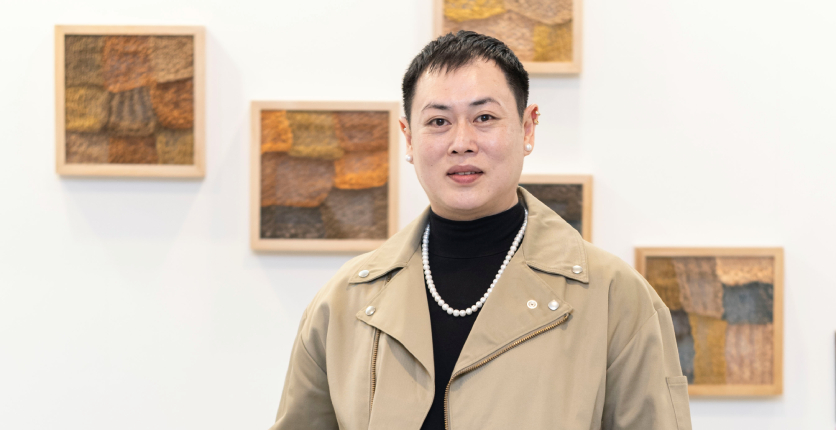 Fair Director Alan Koh has been championing the accessibility of artwork collecting through the Affordable Art Fair since its inception in 2010.
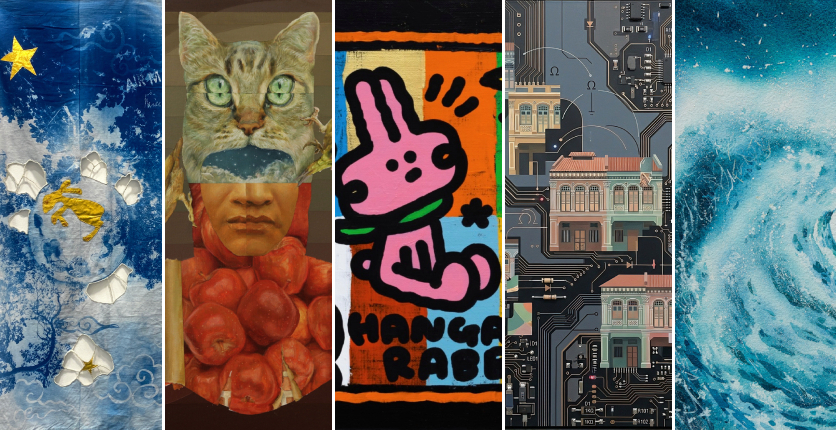
For this year’s edition, Alan has selected five artists whose works reflect the diversity of the Fair, spanning cultural heritage, surreal portraiture, playful contemporary art, technology-inspired imagery and nostalgic watercolours.
Rather than assembling a definitive list of the Fair’s best works, his selections are guided by personal instinct, emotional connection and a willingness to look beyond the obvious.
“I do not choose a work simply because it represents a particular trend. I am much more interested in whether there is something genuine about it and whether it creates a connection,” he shares.
From an emerging British-Singaporean artist exploring fragmented family histories to a Malaysian-born watercolourist capturing the atmosphere of familiar places, these are Alan’s five picks to look out for at Affordable Art Fair Singapore 2026.
Gallery: INTERSECTIONS, Singapore
Sometimes, the most compelling artworks are not necessarily the loudest in the room. For Alan, the works of emerging artist Cassy Oliphant reward those willing to pause and look a little closer.
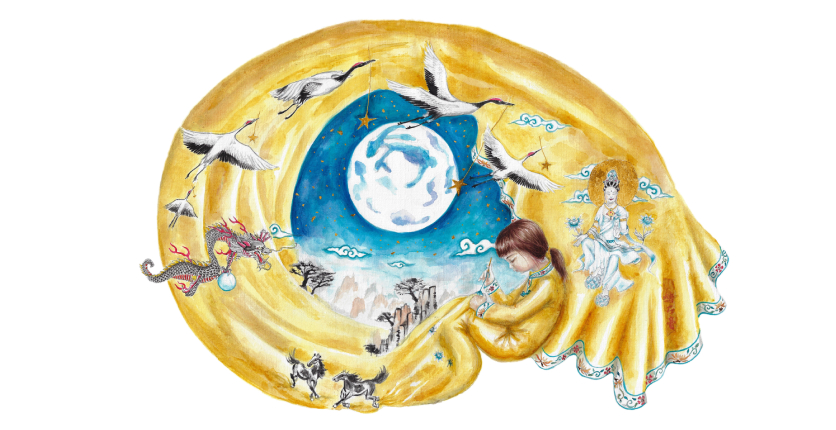
A British-Singaporean artist with Singaporean-Chinese heritage, Oliphant explores family histories, Chinese folklore and aspects of Peranakan heritage through a contemporary artistic lens. Her practice combines cyanotype with painting, textiles and embroidery, bringing together different materials and techniques to examine how memories and cultural identities are passed down through generations.
Cyanotype, a photographic printing process known for its distinctive blue tones, lends the works a sense of fragmentation and fading. Paired with stitching and embroidery, the resulting compositions evoke the delicate nature of preserving stories that might otherwise be forgotten.
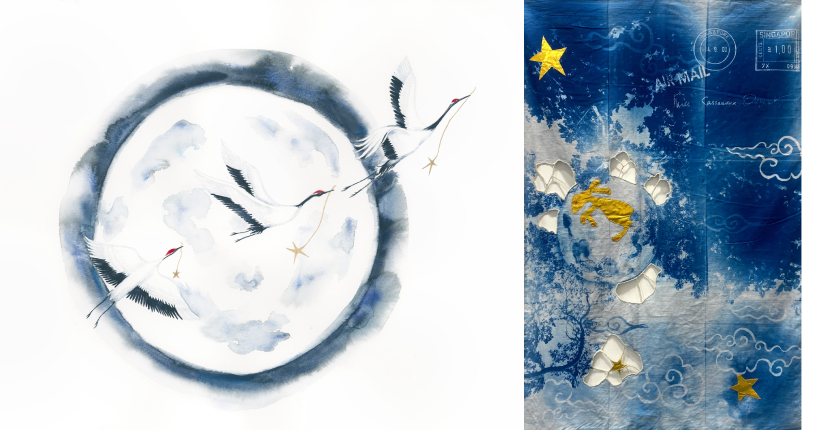
“What drew me to Cassy’s work is the way she brings together personal memory and cultural heritage,” Alan explains. “There is something very fitting about using processes where images can appear fragmented or faded to explore how memories are passed down, changed or sometimes lost over generations.”
It is this interplay between material and meaning that makes Oliphant’s work particularly intriguing. The embroidery introduces an additional layer of care, almost as though the artist is mending or preserving pieces of a family history.
Although deeply rooted in her own background, the themes are widely relatable. Family stories are often incomplete, passed down through anecdotes, photographs and recollections that shift with each generation. Oliphant gives these fragments a tangible form, inviting viewers to reflect on their own histories and the cultural traditions that shape their identities.
For visitors who gravitate towards art with a personal narrative, her works are worth seeking out. They may not command attention from across the room, but spend a little time with them and their quieter details begin to emerge.
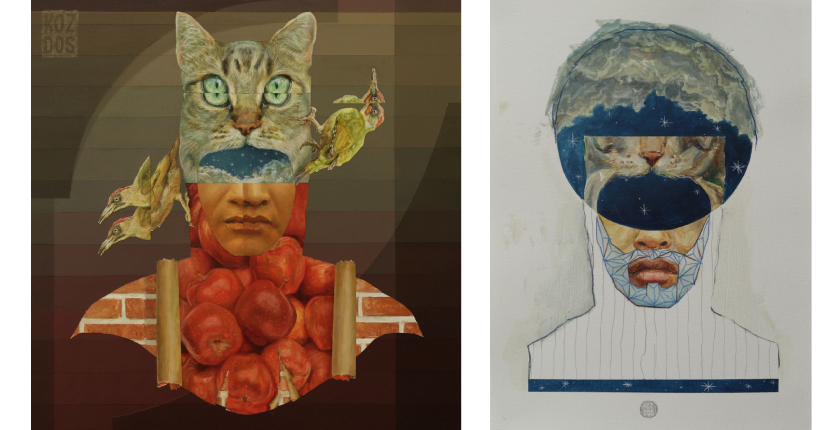
Gallery: 60 Cent Gallery, The Netherlands
If you prefer art that makes an immediate visual statement, KOZ DOS is one artist to keep on your radar.
Represented by 60 Cent Gallery, the Venezuelan artist combines highly realistic portraiture with animal imagery, geometric forms and surreal elements. The juxtaposition creates compositions that are bold and unconventional, drawing viewers in with technical precision before revealing unexpected relationships between their various elements.
For Alan, the appeal lies in the tension between realism and the unusual.
“KOZ DOS’ work is difficult to walk past,” he says. “The first thing that struck me was the combination of highly realistic portraiture with animals, geometric forms and more surreal elements. There is a lot happening visually, but the technical precision holds everything together.”
That precision gives the works a sense of coherence, even when the imagery appears dreamlike or unfamiliar. Human figures and animals share the same visual space, prompting viewers to consider how the natural world intersects with human experience.
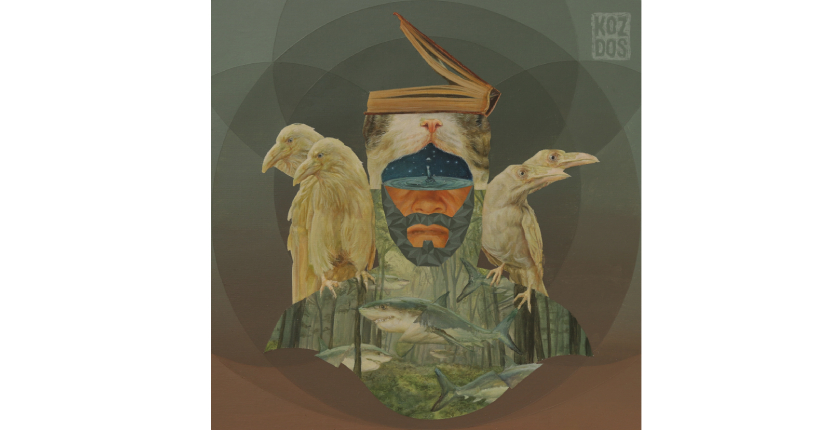
At first glance, the portraits may be the main attraction. Look longer, however, and the surrounding details begin to take on greater significance, opening up different interpretations of the compositions.
“I’m also interested in how he brings the human and natural worlds together,” Alan adds. “At first you might respond simply to the strength of the image, but when you spend more time with the work, you begin noticing the relationships between the different elements and thinking about our own relationship with nature.”
For collectors looking for a conversation starter, KOZ DOS offers an interesting proposition: works with immediate impact that also reward closer examination. It is a reminder that art does not always need to provide straightforward answers. Sometimes, the questions it raises are what make it memorable.
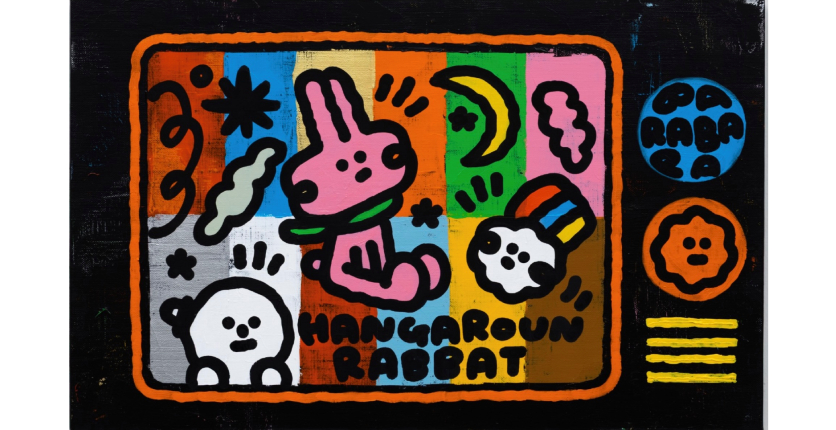
Gallery: Art ImA, Singapore
Art can be serious business, but that does not mean it cannot be playful. South Korean artist Hong Won Pyo brings a dose of colour, movement and optimism to the Fair through his signature character, Barabapa.
Created around ideas of joy and positivity, Barabapa provides the foundation for a distinctive contemporary visual language. Hong trained in Oriental Painting before developing his recognisable line-drawing style, which extends beyond painting into sculpture, installation and live drawing.
The resulting works are cheerful and accessible, yet supported by a strong artistic foundation.
“There is an immediate sense of energy and optimism in Hong Won Pyo’s work that I really enjoy,” Alan says. “His signature character, Barabapa, was created around ideas of joy and positivity, and that spirit comes through very naturally in his art.”
What makes the work particularly appealing is the contrast between its light-hearted appearance and the technical discipline behind it. Hong’s training informs the way he uses lines, repetition and movement, giving his creations a recognisable identity beyond their colourful surfaces.
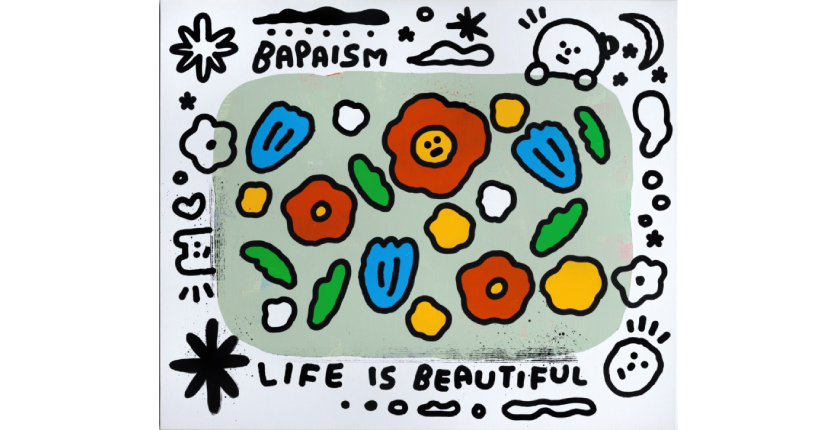
For visitors who may feel uncertain about contemporary art, Barabapa offers an inviting starting point. Its playful character is easy to respond to, while the artist’s consistent visual language gives the work a distinct personality.
Alan also sees value in the way such works challenge expectations of what art should look like. “I like that contrast… there is a strong technical and artistic foundation behind something that initially feels playful and very accessible,” he explains.
For first-time collectors, this could be an opportunity to discover an artist whose work feels approachable without sacrificing individuality. And for seasoned collectors, Hong’s practice demonstrates how a simple character can evolve into a broader artistic exploration across different mediums.
Gallery: COCO ART, China
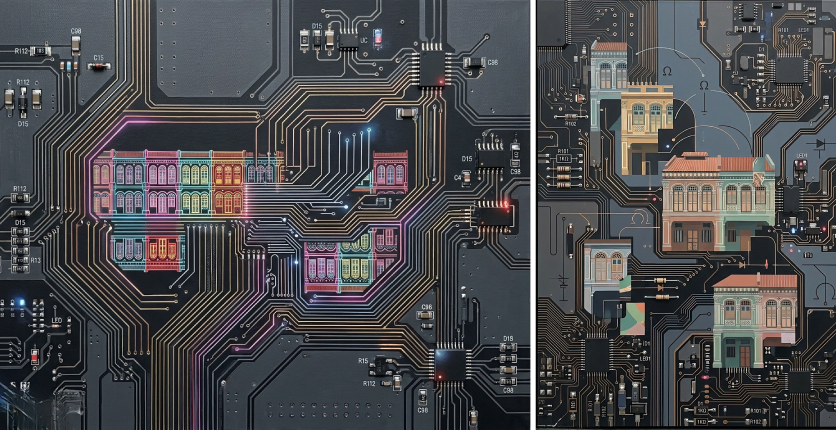
Technology and nostalgia may seem like unlikely artistic partners, but Liu Gang brings the two together in works that reimagine familiar imagery through contemporary materials.
Exploring machinery, electronic circuitry and our increasingly technology-driven environment, the Chinese artist works with techniques and materials including UV printing, acrylic and LED lighting. Among the works that caught Alan’s attention are lightboxes, where illumination becomes an integral part of the viewing experience.
Rather than serving merely as a frame or display feature, the light transforms the image, giving it a different presence from a conventional painting or print.
“I was drawn to Liu Gang’s work because of the way he combines art and technology,” Alan shares. “The lightbox works particularly caught my attention because the format itself becomes part of the artwork. Light changes the way you experience the image and gives something familiar a completely different presence.”
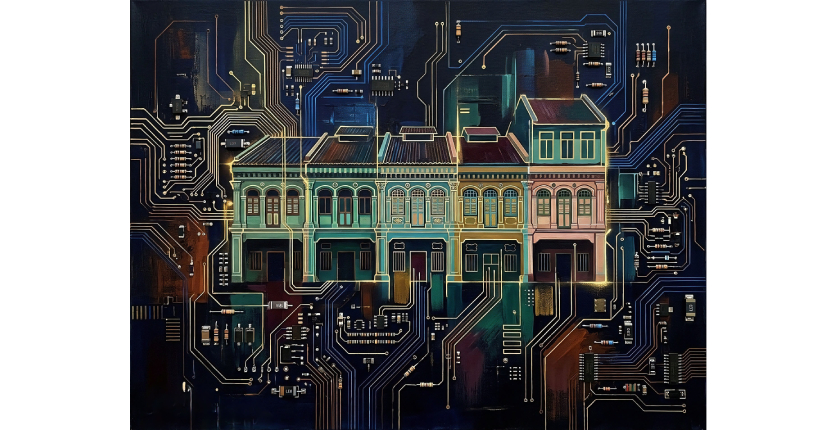
One especially appealing aspect is the Singapore-inspired shophouse imagery. These architectural details are instantly recognisable to many local viewers, yet their presentation through a technology-driven medium introduces a fresh perspective.
There is a compelling contrast at play: the shophouse evokes history, neighbourhood life and a sense of place, while the illuminated format gives it a distinctly contemporary edge. It is a meeting of old and new that reflects the way cities continually reinvent themselves while retaining traces of their past.
Of the five artists on his list, Liu Gang is also the one Alan would most readily bring into his own home.
“It is quite different from what I already have and I like the combination of familiar subject matter with the lightbox format,” he says. “It feels contemporary and unexpected.”
For collectors who appreciate Singapore’s architectural character but prefer something beyond a traditional landscape painting, Liu Gang’s work offers an intriguing alternative. Alan also notes that the shophouse piece is available at an approachable price point, making it worth considering for someone looking to begin a collection.
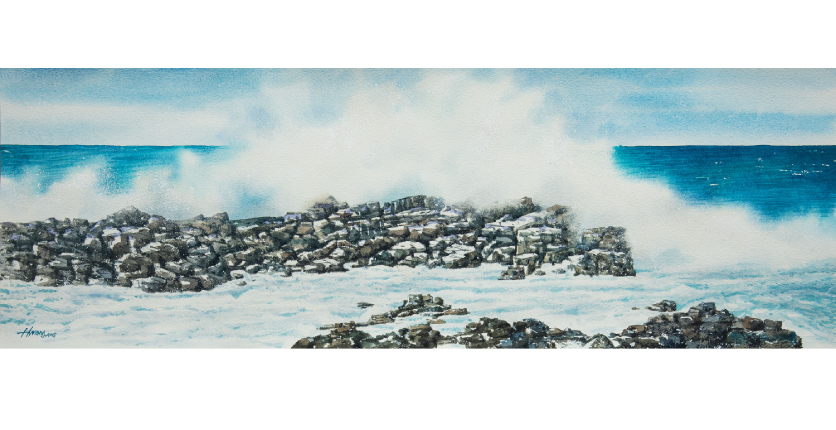 Lok Kerk Hwang, Relentless Tide No. 1, 2026, watercolour, 78 x 26 cm, $3,000.
Gallery: Utterly Art, Singapore
Of the five selections, Malaysian-born artist Lok Kerk Hwang’s work may be the closest to Alan’s personal taste.
Having studied at the Nanyang Academy of Fine Arts (NAFA) and worked in Singapore for many years, Lok has developed a strong connection with the region. His paintings often focus on architecture, cultural heritage and the passage of time, capturing familiar subjects through finely controlled watercolour techniques.
For Alan, the attraction is immediate: these are works that evoke a sense of place without relying on spectacle.
“I have always been drawn to artworks that capture a sense of place and memory, so Lok Kerk Hwang’s watercolours naturally stood out to me,” he says.
Watercolour is a deceptively demanding medium. Its fluidity allows pigments to spread and blend, but the same qualities leave little room for error. The artist must balance control with spontaneity, using washes, layering and careful detailing to create a convincing sense of depth and atmosphere.
Lok’s work demonstrates how technical mastery can bring ordinary scenes to life. Familiar architecture and landscapes become opportunities to reflect on memory, heritage and the subtle changes that occur as places evolve.
“What I appreciate here is the combination of technical skill with a strong sense of atmosphere and nostalgia,” Alan explains.
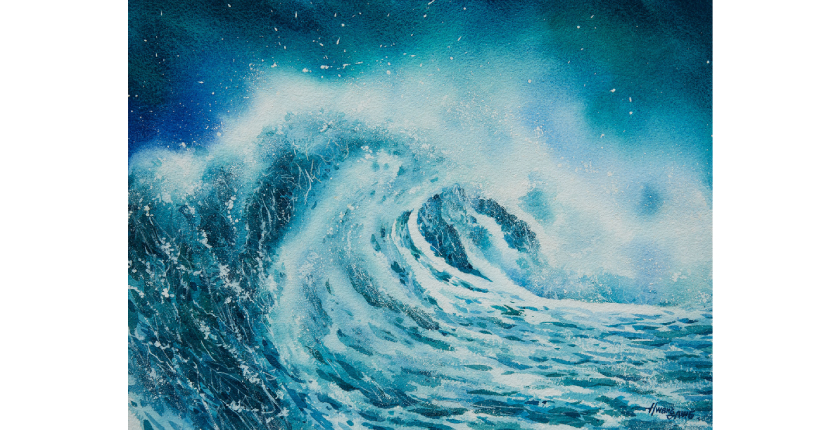
Lok’s accomplishments extend beyond the local art scene. He has received more than 30 international awards and is a Signature Member of the American Watercolor Society, alongside membership in other international watercolour organisations.
Yet, as Alan points out, visitors do not necessarily need to spend a fortune to acquire a work by an accomplished artist. Selected works are available at around $1,500, illustrating the range of price points represented at the Fair.
For Alan, Lok’s work is also the most personal of his five selections.
“It feels very close to what I naturally respond to. It is something rooted in Singapore and Southeast Asia, simple and understated, but with more to discover the longer you look,” he says.
It is a fitting reminder that an artwork does not need to be visually extravagant to leave a lasting impression. Sometimes, the appeal lies in the details and in the memories a familiar scene brings back.
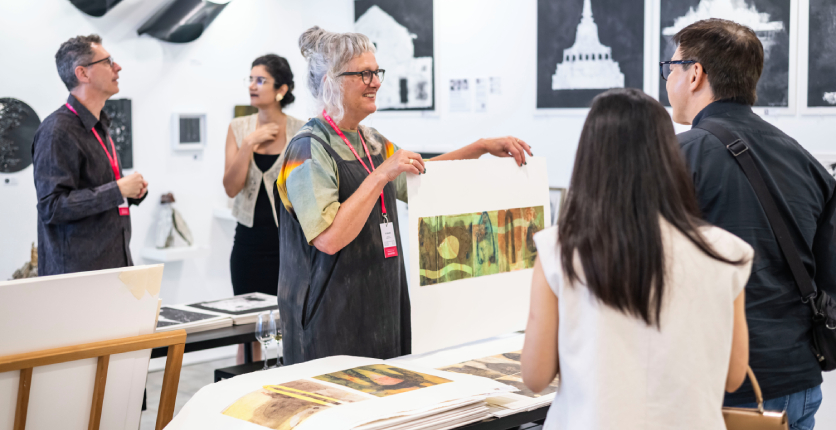
While Alan’s five selections offer a useful starting point, he is quick to emphasise that the Fair is ultimately about individual discovery.
This year’s edition brings together 97 galleries, with more than four in five coming from Asia and around a quarter participating in the Singapore edition for the first time. The diversity creates opportunities to encounter artists and artistic approaches that may be unfamiliar, alongside galleries and names that returning visitors already know.
For Alan, the strength of the Fair lies not only in the artworks on display, but also in the conversations that happen around them.
“I would actually say come and discover all of them,” he says when asked which artist or gallery deserves greater attention from Singapore collectors. “Every gallery at the Fair has gone through our selection process, and we bring them to Singapore because we believe they have something relevant and interesting to offer our audience.”
His advice to newcomers is refreshingly simple: do not try to see everything at once.
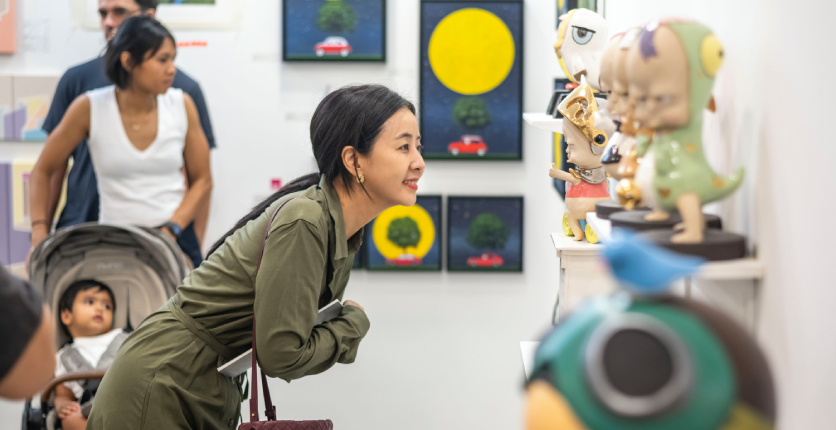
Walk around, pay attention to what catches your eye and allow yourself to spend time with the pieces that draw you back. If a work sparks curiosity, speak to the gallery representatives. Find out about the artist, the materials, the techniques and the story behind the piece.
There is also no need to limit the search to paintings and works on paper. Sculptures, three-dimensional works and pieces that experiment with different materials, surfaces and textures can offer equally rewarding discoveries.
And what about the question many prospective buyers inevitably ask: is an artwork worth purchasing if you do not know much about the artist?
Alan believes people sometimes overcomplicate the process by worrying about an artist’s reputation, a work’s potential investment value or what other people might think of their choice.
“If you find yourself repeatedly drawn back to a particular work, that is usually worth paying attention to,” he says. “We always encourage people to trust their instincts. There is no need to buy what you think you should like.”
That philosophy extends to the price of collecting. Alan’s own first purchase from the Fair was a reduction linocut by artist Matthew Ivey, titled Floodline, which cost under $1,000 and still sits on his desk at home.
His experience illustrates how a collection can begin with a single piece that holds personal meaning, rather than an expensive acquisition or a carefully planned investment strategy.
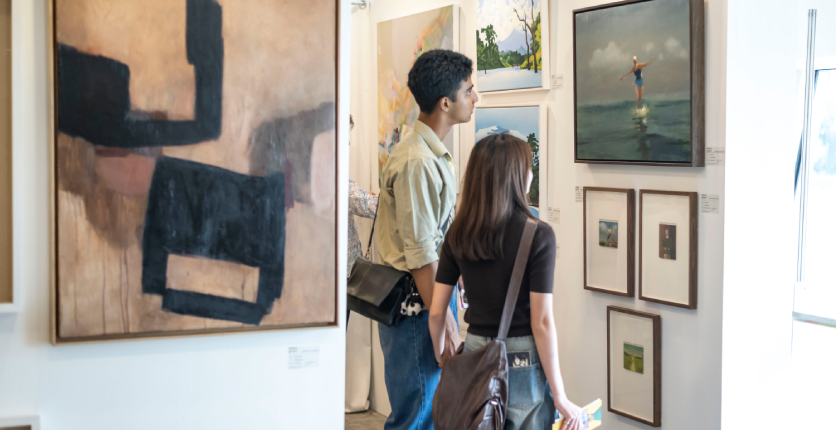
For visitors working with a $1,000 budget, he recommends looking out for prints, works on paper, smaller-format pieces and emerging artists. At the Fair, works priced under $1,000 are identified with a pink sticker, making them easier to spot.
“Your first artwork does not need to be the perfect purchase,” Alan says. “It should simply be something that makes you happy you started collecting.”
Ultimately, that may be the most useful takeaway from his five picks. Whether it is Oliphant’s intimate explorations of cultural memory, KOZ DOS’ surreal compositions, Hong Won Pyo’s joyful character, Liu Gang’s illuminated shophouses or Lok Kerk Hwang’s evocative watercolours, each work offers a different reason to stop and look.
You may arrive at Affordable Art Fair Singapore 2026 with a list of artists to find. But leave room for the unexpected, too. The artwork you remember most may be the one you never planned to discover.
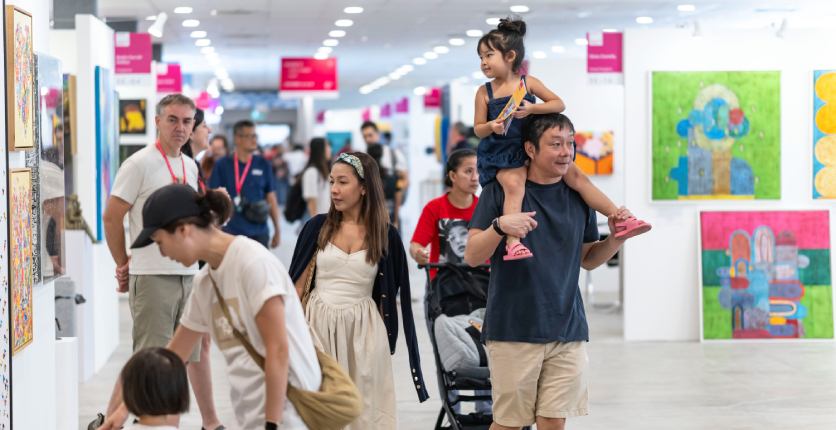
Affordable Art Fair 2026 runs from 26 to 29 November 2026 at the F1 Pit Building. Visit Singapore | Affordable Art Fair for more information and book your tickets here or use your Culture Pass here.
SAFRA Members' Exclusive
Enjoy 50% off tickets – visit Affordable Art Fair | SAFRA for more information and book your tickets here while stocks last.
Tickets Giveaway
Stand a chance to win a pair of Affordable Art Fair tickets by taking part in our giveaway contest on Facebook. We have 25 pairs of tickets to give away, so hurry!
Photos and artwork images: Courtesy of Affordable Art Fair