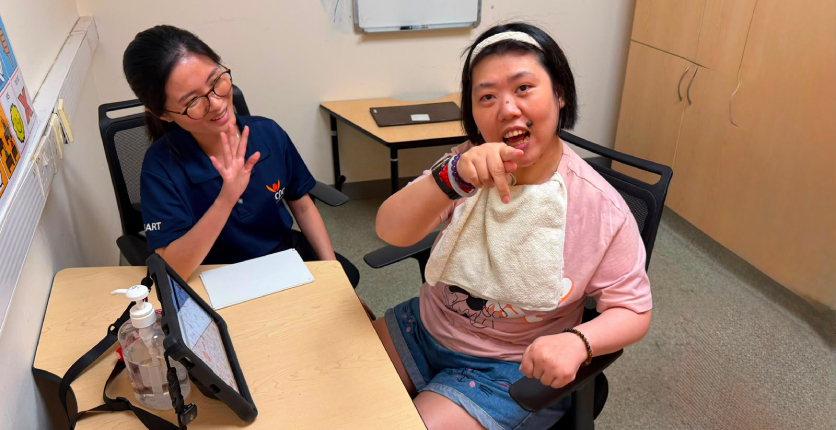
Before you read Yee Hua's story, consider this:For many of us, saying what we want for dinner, asking for help, or sending a message to a loved one are everyday things we hardly think about. For someone living with cerebral palsy, these simple acts can represent years of therapy, support and perseverance.By participating in SAFRA Swim For Hope or making a donation to support the cause or our swimmers, you can help beneficiaries like Cerebral Palsy Alliance Singapore (CPAS) continue providing life changing therapy, rehabilitation and assistive technology to persons with cerebral palsy and multiple disabilities.Join us in creating hope. Swim, donate or support a swimmer today at SAFRA Swim For Hope. |
There are some things most of us never think twice about while growing up: telling our parents what we feel like eating, asking for help when we need it, or simply saying what’s on our mind. For 40-year-old Lim Yee Hua, who has cerebral palsy, being able to do these everyday things represents something much more profound – a hard-won sense of confidence, independence and connection, made possible through the dedicated support of Cerebral Palsy Alliance Singapore (CPAS) and community initiatives such as SAFRA Swim For Hope.
And happiness, for Yee Hua, can be found in the simplest of things: taking photographs, watching her favourite dramas and cartoons, playing puzzles on her iPad and, most importantly, eating good food.
Ask her what she likes to eat, and she is more than happy to tell you. “I like eat chicken rice,” she says through her iPad. It may be just five simple words, but behind them lies a remarkable journey, one in which finding her voice has given Yee Hua something many of us take for granted: the freedom to say what she wants, when she wants it.
Born in 1985, Yee Hua was diagnosed with cerebral palsy as a young child. She began receiving therapy through CPAS when she was around a year old and later attended CPAS School, graduating at 18.
Today, at 40, she continues to receive occupational therapy and speech and language therapy through CPAS’ Outpatient & Home Management Programme. For Yee Hua, therapy is not simply about learning new skills. It is about having a voice, making choices and being able to participate more independently in everyday life.
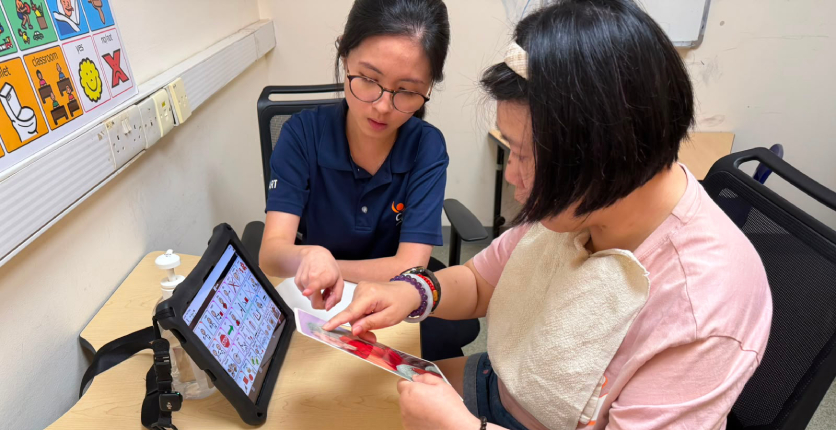
For much of her life, communicating was a challenge for Yee Hua. As she is non-verbal, she previously relied on facial expressions, gestures and simple sign language to communicate with her family and friends. While these methods allowed her to express some basic needs, there was often room for misunderstanding.
“She would communicate with facial expressions, gestures and simple sign language,” explains Melanie Ding, Speech Therapist with CPAS. “Her messages were not very clear, so people would often have to guess what she was trying to communicate.”
That began to change with the introduction of a high-tech Augmentative and Alternative Communication (AAC) system using Proloquo2Go on an iPad.
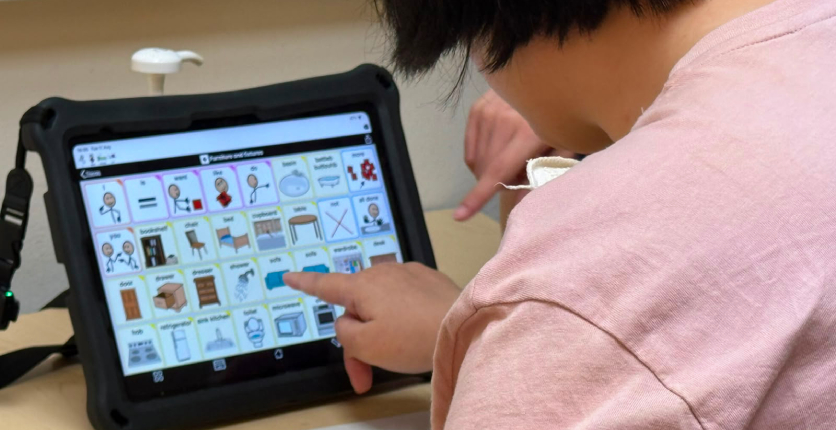
Initially, Yee Hua communicated using individual words. With regular practice and encouragement, she progressed to phrases and, increasingly, complete sentences. For Melanie, one breakthrough moment came when Yee Hua was able to put words together to tell her mother what she wanted to eat.
It might sound like an ordinary exchange between a daughter and her mother. But for Yee Hua, being able to say, in her own way, “I want chicken rice” or “I want a hamburger” is an expression of choice and independence.
And Yee Hua has certainly made good use of her newfound voice. “She is better able to tell us what food she specifically craves for,” Melanie says.
Her mother has also become an important part of this communication journey. When her parents are out doing part-time delivery work, Yee Hua can send messages to her mother through the iPad. She can say hello, share how she feels, tell her mother what she wants to eat, or let her know when she needs help. For her family, these messages provide more than information. They provide reassurance.
The Difference Your Support Makes
Behind every breakthrough is a network of support.Speech therapists, occupational therapists, social workers, assistive technology and family support services all play a role in helping individuals like Yee Hua become more independent.
Many of these services are made possible through the generosity of donors, fundraising events and community support initiatives such as SAFRA Swim For Hope.
Every swimmer who takes part.
Every donation made.
Every lap swam.
Together, they help provide opportunities for individuals with disabilities to thrive.
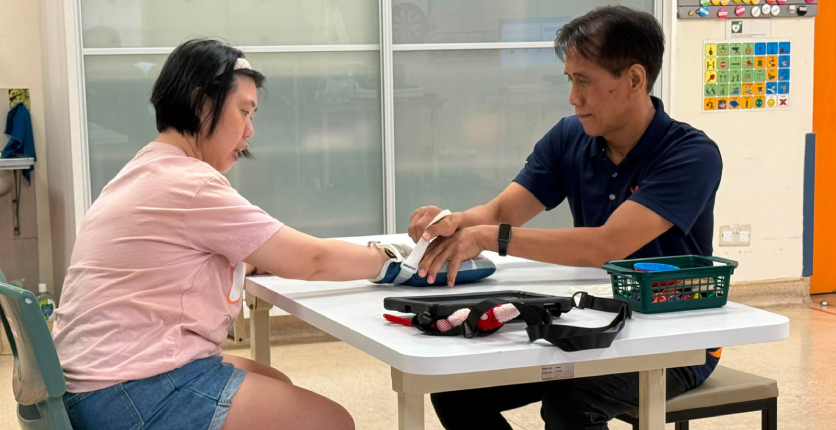
Yee Hua’s progress is not just limited to communication. Senior Occupational Therapist Dedi Suhandi has been working with her since 2017 at CPAS. When they first began working together, Yee Hua faced difficulties with various daily activities, including bathing, dressing, feeding, toileting and grooming. Her affected left hand also made many everyday tasks more challenging.
But over the years, Dedi has witnessed significant progress. “Last time she had messy eating, she used both hands,” he recalls. “But now I think she has improved a lot. She can manage feeding herself using utensils very well now.”
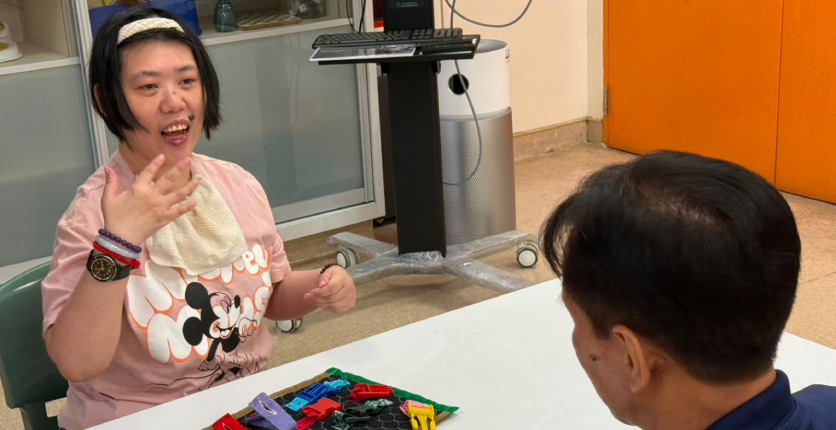
Perhaps more importantly, Dedi has seen Yee Hua develop the ability to make her own choices. “Last time when I saw her, I had to instruct her to do (things), but now she can have her own choice,” he says.
That ability to choose is easy to overlook. Yet for someone who has spent much of her life dependent on others, being able to decide what she wants to do next is an important expression of independence. It is also a reminder that rehabilitation is not always about achieving dramatic milestones. Sometimes, progress is simply having more say in how you spend your day.
Behind Yee Hua’s progress is a team that extends beyond her therapists.
As a Social Worker at CPAS, Tan Jin Le takes a holistic approach to supporting Yee Hua and her family, coordinating with therapists and connecting them with relevant community resources.
One important aspect of his work has been helping Yee Hua access funding for assistive technology, enabling her to use her iPad and communication app more effectively. “When I first met Yee Hua about two years ago, she had difficulty expressing herself,” says Jin Le. “She was generally more quiet in nature and communication with her was harder.”
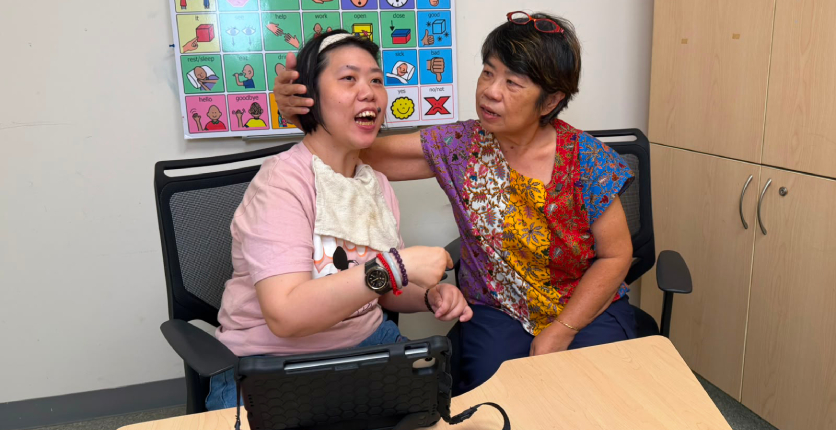
Today, that picture has changed.
“We can actually communicate quite well through her Augmentative and Alternative Communication (AAC) system using Proloquo2Go on an iPad,” he says. “We can see her being more joyful and more cheerful, and able to be more independent in communicating with her family. That’s very heartwarming to witness.”
For Jin Le, the goal is not simply to help Yee Hua communicate more words. It is to help her communicate more freely, while supporting her continued independence and working with her family to ensure they receive the support they need as well.
Not Everyone Can Swim. But Everyone Can Help.You may not be participating in SAFRA Swim For Hope this year. But you can still make an impact.Support a participating swimmer by making a donation. Share the cause with family and friends.Every contribution, regardless of amount, helps beneficiaries like CPAS continue supporting individuals on journeys like Yee Hua's. |
This is where SAFRA Swim For Hope comes in.
An annual fundraising initiative, SAFRA Swim For Hope brings the community together through swimming to raise funds for different beneficiaries each year, including CPAS which is one of the beneficiaries in this year’s edition. The funds raised support CPAS’ therapy and rehabilitation services, including its Outpatient & Home Management Programmes.
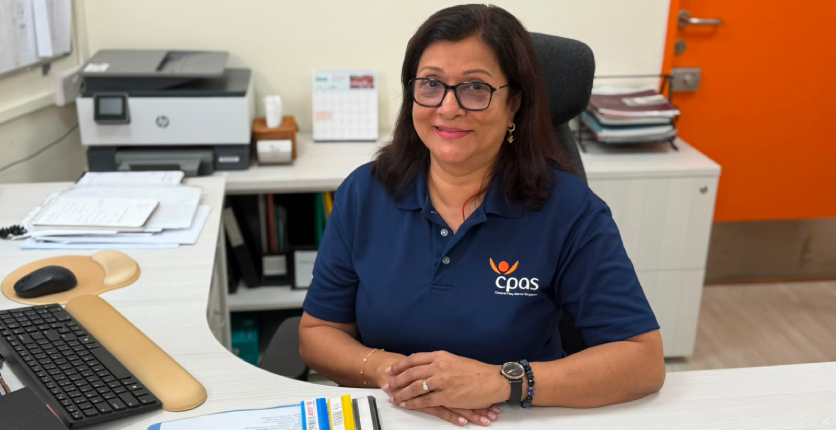
This support helps make specialised services more accessible and sustainable for persons with cerebral palsy and multiple disabilities, according to CPAS’ Executive Director, Latha Kutty.
“Ultimately, we want to empower all our clients to have a greater voice, build independence and participate as fully as possible in their daily lives and in the wider community,” she says.
The impact of that support can take many forms. For some, it may help fund specialised equipment or assistive technology. For others, it may support access to physiotherapy, occupational therapy or speech and language therapy. For someone like Yee Hua, it can help her continue developing the skills that allow her to communicate, make choices and manage everyday activities more independently.
In other words, every lap swum can help support a journey that takes place far beyond the swimming pool.
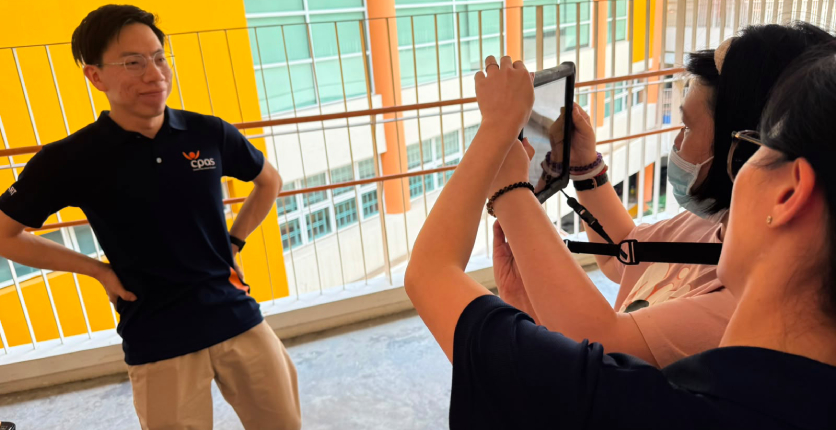
There is another delightful side to Yee Hua’s communication journey: she loves taking photographs.
During therapy sessions, she often wants to take photos with people she meets. These photographs are then added to a “people” folder on her communication app, along with their names.
It has become something of a ritual. When she meets someone new, she wants a photo. Then she can save the person’s picture and name, giving her another way to remember them and greet them during future interactions.
It is an unexpectedly charming glimpse into Yee Hua’s personality, and a reminder that communication is about much more than expressing basic needs… it is about connection too.
Simply put, it is about being able to say hello to someone you remember, sharing what makes you happy and letting people know what is important to you.
And judging from her enthusiasm during the interview, Yee Hua is not about to let a camera opportunity pass her by.
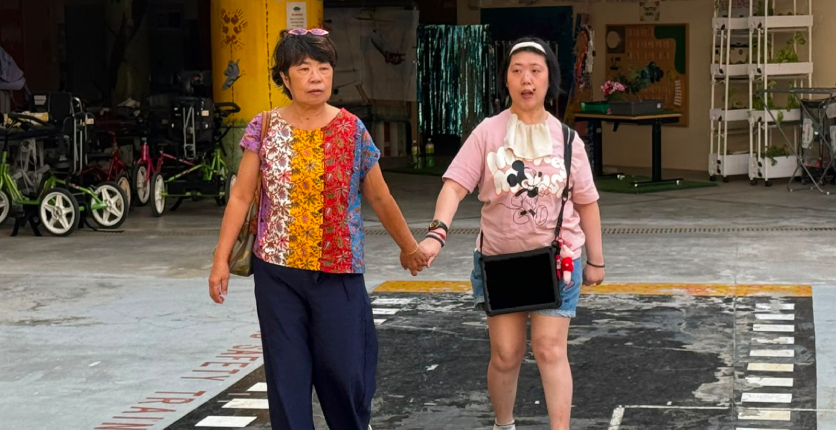
There are still challenges ahead. Yee Hua continues to work on her fine motor skills and coordination, while her Speech Therapist is helping her form longer and more complete sentences using her communication device. She also continues to require supervision in certain situations, particularly when out in public.
But her journey is not defined by what she cannot do. It is defined by what she has learned to do and what she continues to work towards.
When asked what she would like to say to those supporting SAFRA Swim For Hope, Yee Hua’s mum has a simple message: “Don’t give up and live your life to your fullest potential.”
It is advice that feels especially poignant coming from the mother-and-daughter pair whose own journey has been filled with countless small challenges and victories.
For the swimmers taking part in SAFRA Swim For Hope, the challenge may be measured in laps. For Yee Hua, progress is measured differently: a new sentence, a choice made independently, a message sent to Mum, or perhaps simply being able to tell someone exactly what she wants for dinner, especially her favourite chicken rice.
But these moments matter. Because every message gives Yee Hua a little more of a voice. Every therapy session gives her another opportunity to build her independence. And every contribution to SAFRA Swim For Hope helps ensure that people like Yee Hua can continue taking those steps forward to leading a better life.
This year, when you swim for hope, you are not just completing laps. You are helping people find their voice, build their independence and live life to their fullest potential.
CPAS is one of the beneficiaries for this year’s SAFRA Swim For Hope. Introduced in 2011, SAFRA Swim For Hope is an annual charity swim event which provides an opportunity for Operationally Ready National Serviceman and their families to contribute to charitable causes, while promoting fitness and bonding through swimming. This year, the funds raised will go towards the various beneficiary organisations to support youths at risk and people with disabilities.
Visit Swim For Hope 2026 | Home for more information. Registration to join the swim will close on 4 September 2026 but you can still donate to support the cause till 17 October 2026.