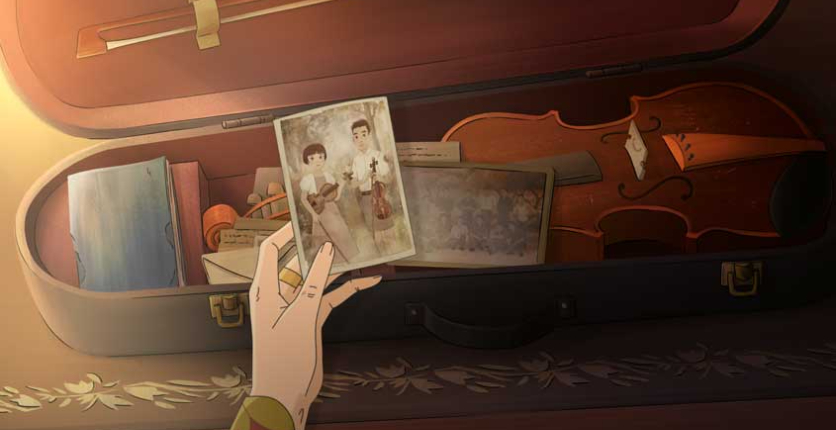
There are some stories that belong in history books. And then there are stories that need to be felt. The Violinist is the latter.
Set against the backdrop of Singapore during the Japanese Occupation and its aftermath, the animated feature follows two childhood friends whose lives are irrevocably changed by war. Yet beneath its sweeping historical canvas is something deeply intimate: a story about friendship, separation, sacrifice, memory and the enduring power of music.
According to director Ervin Han, 51, the film was also a deeply personal creative mission. A filmmaker, producer and co-founder of Robot Playground Media, Ervin has spent close to two decades working in animation. The Violinist marks his feature-film directorial debut – and nearly 10 years of development went into bringing it to the big screen.
That long journey culminated in an extraordinary milestone for Singapore animation. At the prestigious and acclaimed 50th Annecy International Animation Film Festival, The Violinist won the Cristal for a Feature Film, the festival’s top prize, as well as the SACEM Award for Best Original Soundtrack.
For Ervin, however, the significance of the film goes beyond the trophies. “I believed there was a Singapore story here that hadn’t been told this way before,” he says. “I wanted to tell a story about who we are; where we came from, and a story shaped by our histories.”

Singaporeans are no strangers to the history of the Japanese Occupation. We know the dates, the events and the names. But The Violinist deliberately moves away from history as a collection of facts and instead asks audiences to consider what those events meant to the people living through them.
“Dates and events tell us what happened; people help us understand what it felt like,” says Ervin. That distinction lies at the heart of the film.
Rather than focusing solely on military campaigns or political figures, The Violinist explores how conflict tears through ordinary lives – separating families, disrupting friendships and forcing people to make choices they could never have imagined making.
“War is fought by armies, but its consequences reach everyone,” Ervin explains. “Ordinary people have their relationships, dreams and futures changed by decisions far beyond their control.”
That human cost was something he encountered repeatedly during the film’s research, through books, historical records and oral histories.
“What stayed with me most were often not the famous historical events, but accounts of ordinary life continuing under extraordinary circumstances: families separated, people surviving shortages, and individuals making difficult choices simply to get through the war.”
It is also why animation was such a natural medium for the story. As an animation filmmaker, Ervin says he never really viewed live action as the alternative. Instead, animation gave the filmmakers the opportunity to create a degree of poetic distance from the brutality of war, while allowing “the music, memory and emotions to become larger than life”.
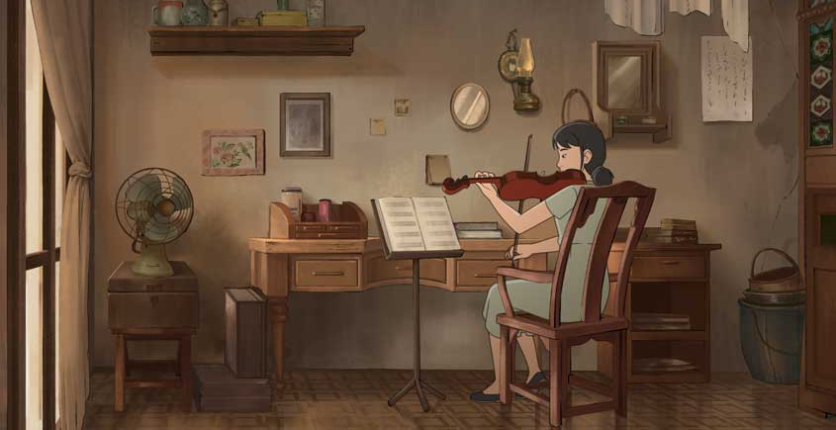
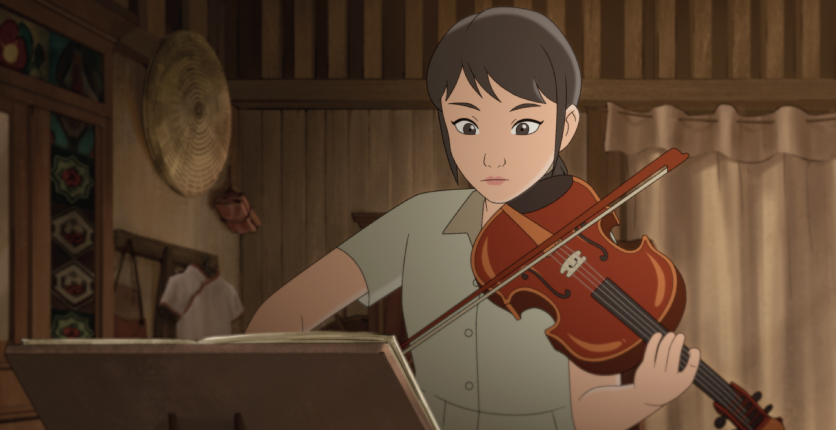
And at the centre of all that is the violin.
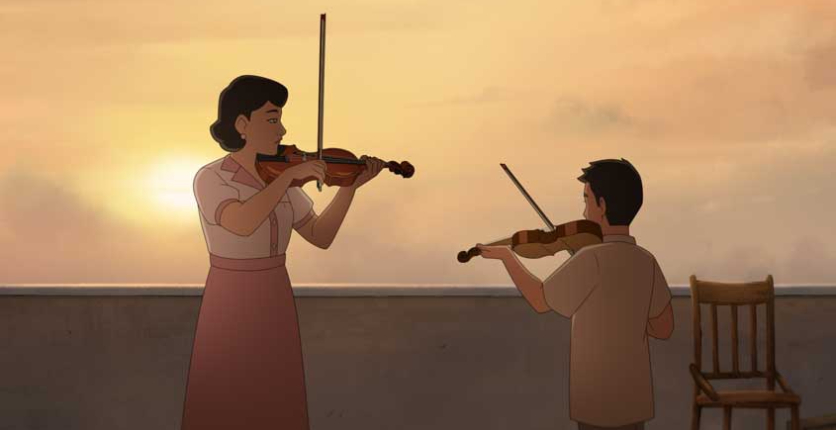
In The Violinist, music is not merely something playing beneath the action. It becomes a storytelling device in its own right, a bridge connecting characters across time, distance and circumstance.
“The violin became a vessel for memory,” says Ervin. “It survives across decades and connects people who are separated by time, distance and circumstance, so eventually it carries far more than just music.”
The filmmakers treated music almost as another character. Singaporean composer Ricky Ho, a Golden Horse Award winner, created the central musical language of the film, with Spanish composer Isabel Latorre contributing additional music. The result is the recurring Sunset Sonata which evolves alongside the characters, carrying emotional significance as the story unfolds.
The approach paid off at Annecy, where the film received the SACEM Award for its original soundtrack. “It was particularly meaningful because music is so fundamental to the film,” Ervin says. “Winning the SACEM Award alongside the Cristal felt like recognition that the music and animation had succeeded together as one piece of storytelling.”
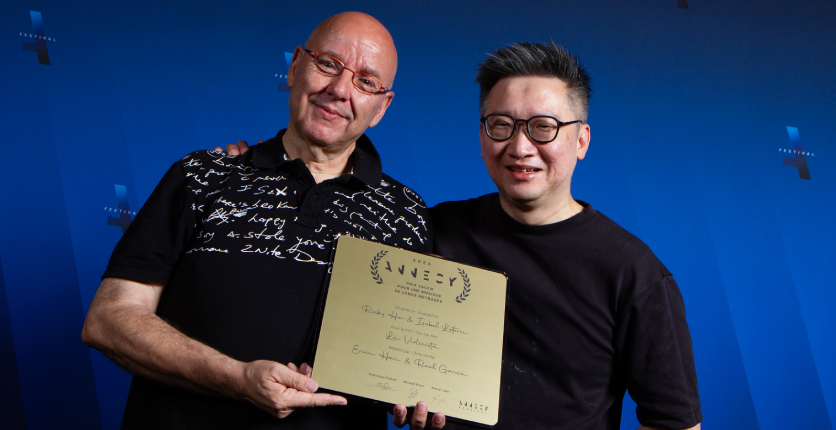
The film’s journey was anything but straightforward. Executive producer Leonard Lai, 53, joined the project about three years before production began. With 23 feature films produced or executive produced, including Ah Boys to Men, The Lion Men and Long Long Time Ago, Leonard had already established himself as one of Singapore’s most prolific film producers.
Yet The Violinist presented a very different challenge. When Ervin first approached him, Leonard was shown concept images of the characters, locations and scenes. What immediately struck him was the attention to historical detail and the ambition to create the film entirely through hand-drawn animation.
Most importantly, he was moved by the script. “I have always wanted to do a Singapore period film, about what our forefathers had gone through during one of the most difficult periods in Singapore history,” says Leonard.
The scale of the project was daunting. With a budget among the highest ever for a Singapore film, financing became one of the biggest hurdles. Government grants from Singapore, Spain and Italy helped, alongside private equity investment.
But convincing investors to back an ambitious Singapore animated feature was not easy. “The last Singapore animated film was made 15 years ago,” Leonard notes. “So to present a financing plan that appeals to them is a huge challenge.”
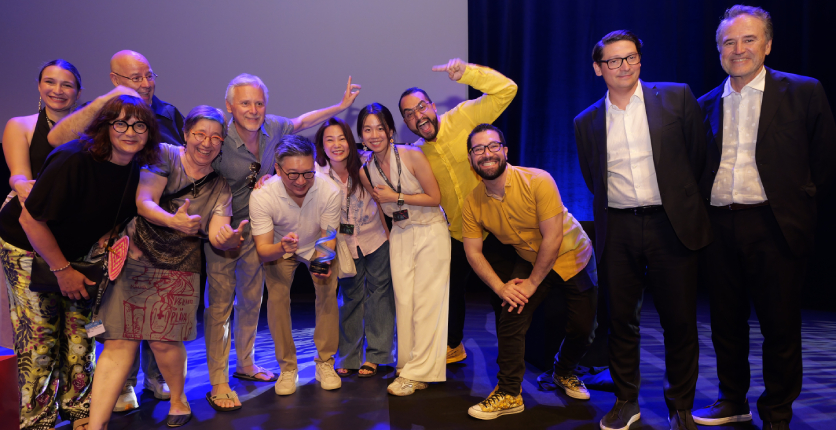
The production eventually brought together collaborators from Singapore, Spain, Italy and more than 10 countries. Yet the international nature of the production never meant compromising its Singaporean identity.
“I must thank all the co-producers from Spain and Italy, and all the animation companies in the different countries that worked on The Violinist,” Leonard says. “They had the utmost respect in what the film is trying to achieve.”
For Leonard, that Singaporean identity is precisely what gives the film its international appeal. “The Violinist proves that a story about Singapore, with core creative control by Singaporeans and with Singapore characters, can travel internationally and stand side by side with the best productions from the world.”
His belief is simple: Singapore does not have to dilute itself to be understood. “In fact, we should concentrate on the Singapore identity. It is what makes the film stand out, what makes it special and unique.”
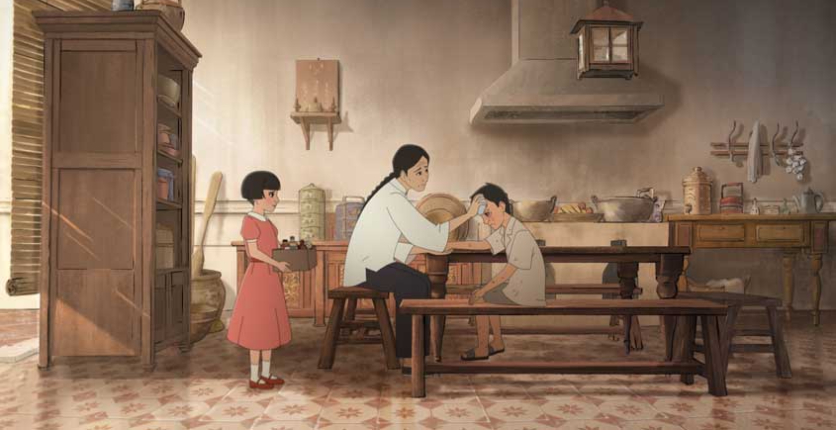
The international collaboration was one of the most remarkable aspects of the production, according to Ervin. Artists from more than 10 countries worked on the film, but the creative process ultimately kept coming back to Singapore for review, approval and post-production.
“Over months and years, it became a global village of sorts,” Ervin recalls. “We inadvertently made so many friends from different cultures, unified by our love for animation.”
Among those collaborators was Spanish animation director Raúl García, who served as co-director. Ervin had known Raúl since his time as a visiting professor at LASALLE, and the pair had discussed working together for years. Raúl brought extensive experience in animation direction and visual storytelling, as well as leadership to a Singapore team embarking on its first feature.
The film’s voice cast similarly bridged generations, with local veterans Tan Kheng Hua and Adrian Pang alongside younger actors Fang Rong and Ayden Sng. Ervin says the actors brought an emotional truth to their characters that went beyond simply providing voices. Fang Rong and Ayden Sng recorded many of their scenes together, including the English and Mandarin versions, allowing their chemistry to come through naturally.
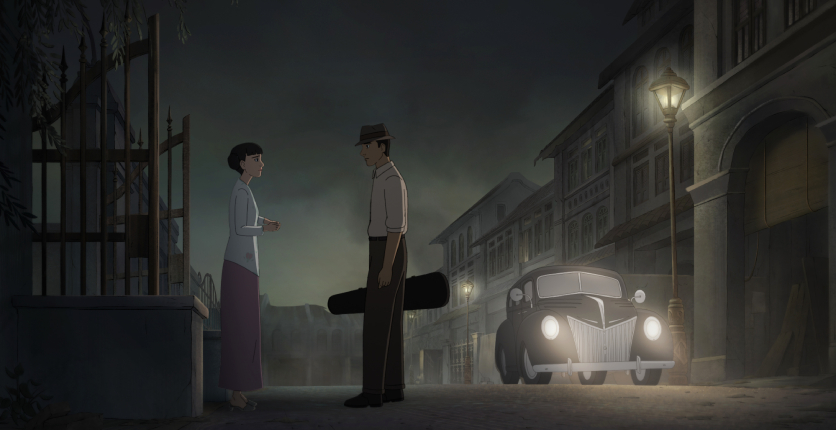
While The Violinist is set during wartime, Ervin is careful not to reduce courage to battlefield heroics. “Courage isn’t always heroic in the cinematic sense,” he says. “Sometimes it is protecting your family, helping someone else, enduring loss or simply finding a way to carry on when your world has fallen apart.”
That idea of resilience is particularly relevant to the generation portrayed in the film. Ervin believes that resilience meant more than surviving the Japanese Occupation. It meant rebuilding afterwards – restoring families, livelihoods and communities, and eventually helping to build a country. “There is something very humbling about that,” shares Ervin.
Executive producer Justin Deimen, 40, connected with the project for similarly personal reasons. A producer of more than 40 film and television projects since 2012, Justin has worked across different parts of the world and focuses on projects with cross-cultural values and international potential. He also leads the Intercultural Theatre Institute in Singapore.
But his connection to The Violinist began with his own family history. “One of the key reasons I was drawn to Ervin’s story almost ten years ago was that it mirrored my family’s struggles during the war,” he shares. His great-grandmother had rescued and harboured neighbours in her home during the Occupation, and those families have remained close.
That personal connection helped Justin see the film not simply as a historical account, but as a reminder of how ordinary people respond when the world around them collapses. “The film asks us to consider the consequences of a choice, but also the fear, loyalties and constraints surrounding the person who makes it,” he says.
It also reveals something about human nature. “In our darkest moments, we manifest deep reservoirs of judgement and responsibility.”
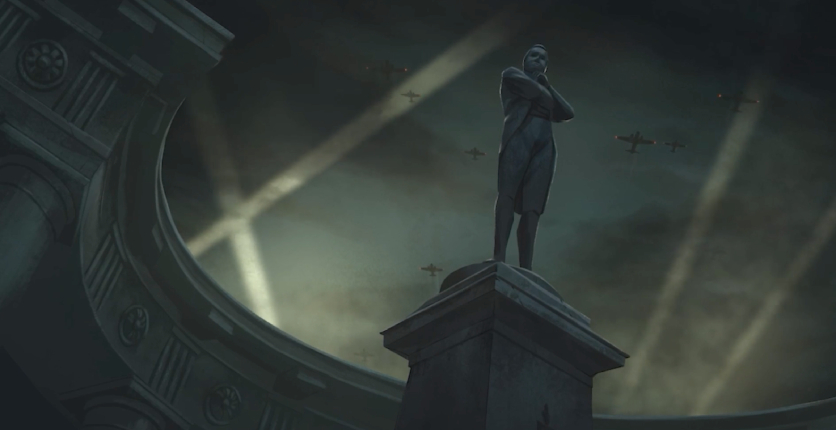
Perhaps the most important question The Violinist asks is not what happened during the war, but what we have inherited from those who lived through it. For younger Singaporeans who have grown increasingly distant from the wartime generation, Ervin hopes the film creates curiosity.
“The Singapore we inherited wasn’t inevitable,” he says. “Earlier generations lived through extraordinary uncertainty and hardship, and understanding their experiences can give us a deeper appreciation of what we have today.”
Justin believes that distance makes storytelling increasingly important. “We’re reaching a point where fewer people can tell us directly what those years were like,” he says. The everyday things many of us take for granted – going to work, meeting friends, raising a family, planning for the future – all depend on something that can be easy to overlook precisely because it is so familiar: security.
“How much of our everyday life depends on feeling safe,” Justin says. For him, that is where The Violinist intersects with the broader idea of Total Defence. “Stories and art give a human face to what and why we defend,” he says. “They connect the demands of service with the families, friendships and everyday freedoms that make it meaningful.”
Ervin shares a similar view: “I think stories can help us understand what we’re protecting, not just what we’re defending against,” he says. “Culture, memory, relationships and a sense of belonging are all part of why a place becomes home.”
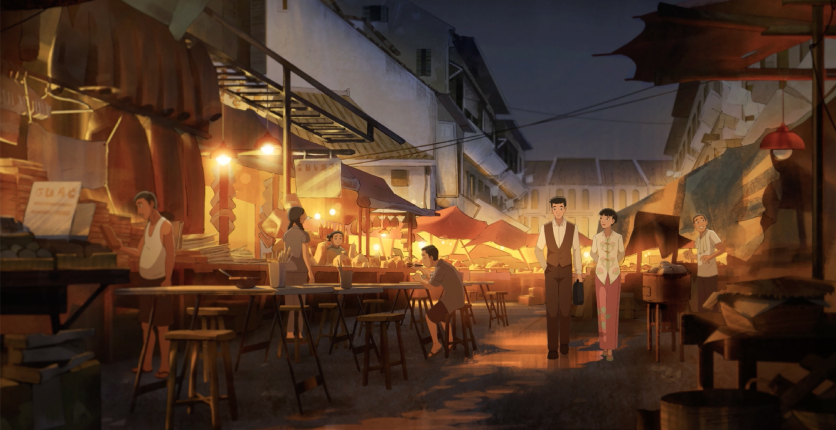
For NSmen, defending Singapore is often framed through training, readiness and service. But after spending years making a film about people who experienced the consequences of losing peace, the three producers offer a more personal answer to the question: What is Singapore worth defending?
For Ervin, it comes down to home. “Not simply a place on a map, but the people, memories, relationships and way of life that give that place meaning.”
Leonard puts it even more fundamentally: “All about Singapore is worth defending. Without peace there is no family, no dreams, no future.”
For Justin, it is the shared life Singaporeans have built together. “The people we come home to, and the shared life we have built together,” he says. “I love Singapore for its unique culture, its resilience and the warmth of its people. To me, it is the best country in the world – not because it is perfect, but because it is ours.”
When the Cristal was announced at Annecy, Ervin says his first reaction was disbelief. Then came the realisation of what the moment represented: a decade of persistence and the collective effort of hundreds of people.
“That was probably the most meaningful part,” he says. “Hundreds of people across many countries contributed to the film, some of them years apart, so standing on that stage felt like recognition of a much larger collective journey, all coming together to tell this Singaporean story.”
The recognition has also strengthened his belief that Singapore stories can travel without losing what makes them Singaporean. “If the emotions are truthful and universal, cultural specificity can actually be one of its strengths,” says Ervin.
Leonard hopes the film similarly opens doors for the next generation of local filmmakers and animators. Singapore already has the talent, he believes. What is needed is the ambition to look beyond the country’s borders while retaining a Singaporean creative core.
Justin agrees, but stresses that one successful film is only the beginning. “We should be proud of this achievement while asking how we make the next ambitious Singapore story possible – always keep aiming high.”
Perhaps that is ultimately what makes The Violinist resonate most beyond its wartime setting. It is a story about people who endured uncertainty, lost much and yet found the strength to continue. It is about friendships separated by circumstances beyond their control. It is about music carrying memories across generations. And it is about a country whose present was built on the sacrifices and resilience of people whose names many of us may never know.
Ervin hopes audiences leave the cinema moved by the characters and music, and perhaps with a few questions of their own. He hopes they will ask their parents and grandparents about their experiences. And he hopes a film can become the starting point for a conversation about family and history.
“Facts preserve what happened; stories can preserve something of how it felt,” he says. “If a film makes a younger person curious enough to ask a parent or grandparent about their experiences, that memory continues.”
Because sometimes remembering the past is not about looking backwards. It is about understanding what we have, what we stand to lose – and why the things we call home are worth protecting.
The Violinist opens on 17 September 2026 at Golden Village theatres, Shaw theatres, Filmhouse and other cinemas across Singapore.
SAFRA and MovieMax members were treated to over 60 pairs of free tickets to a preview of The Violinist in a movie contest giveaway. Thank you to all members who took part and congratulations to those who won! If you missed this giveaway, watch out for other movie ticket contests and giveaways on our website here.
READ MORE: POV: The Violinist proves that even in war, there are some things violence cannot silence | SAFRA
Film stills and photos courtesy of The Violinist film.