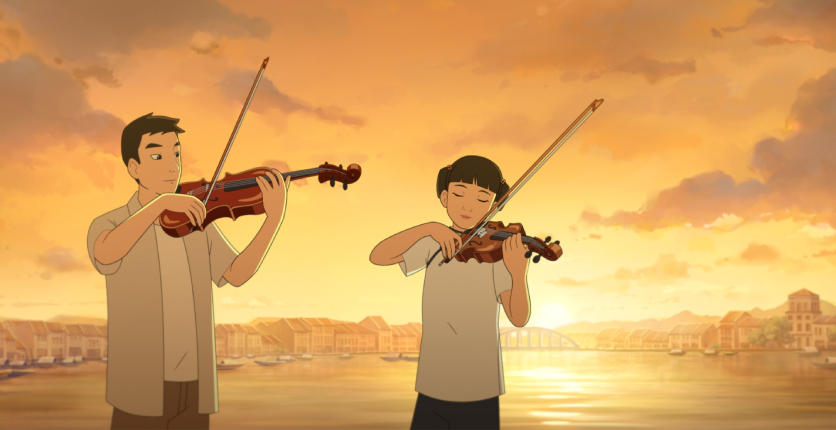
From the moment the tunes of Tchaikovsky’s Violin Concerto filled the cinema and the painstakingly animated stage of the Esplanade Concert Hall appeared on screen, I knew I was in for an emotional experience with The Violinist.
Having played in an orchestra myself as a young musician with the Singapore Youth Orchestra, now known as the Singapore National Youth Orchestra, the film resonated with me almost immediately. I have always believed in the power of music: its ability to express what words cannot, to preserve memories and, perhaps most importantly, to bring people together. That belief lies at the very heart in the central themes of The Violinist.
Co-directed by Singaporean filmmaker Ervin Han and Spanish animator Raul Garcia, the animated feature has been earning international acclaim, including the coveted highest prize at the Annecy Festival and the SACEM Award for Best Original Soundtrack in a Feature Film. It is an achievement worth celebrating, not simply because of the recognition itself, but because it demonstrates that a Singapore story, told through animation, can have such an inspirational presence on the world stage.
At its core, The Violinist is a tribute to the uplifting and enduring power of music. Through the story of two childhood friends and musicians, Fei and Kai, the film traces lives forever changed by war, separation and loss during the Second World War.
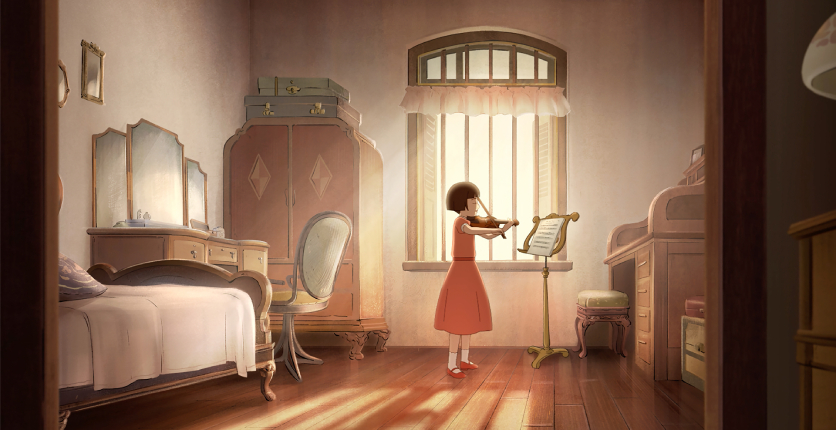
Of course, we need to talk about the music in the film. For classical music lovers, The Violinist offers plenty to savour. Familiar works by some of history’s greatest composers are woven into the story, including Mendelssohn’s beloved Violin Concerto and Jules Massenet’s Méditation from Thaïs. The latter, in particular, is used to deeply moving effect during a sequence involving the survivors of war, allowing music to convey an emotional weight that dialogue alone could never fully capture.
The original score deserves just as much praise. At the centre of the film is Sunset Sonata in D major, a piece with particular significance to the story. Composed by Singaporean Golden Horse Award winner Ricky Ho in collaboration with Spanish composer Isabel Latorre, the score becomes the film’s emotional anchor, carrying us through its tenderest moments as well as its most intense and devastating ones.
There is also something especially fitting about the violin being at the centre of it all. As Fei says in the film: “The piano is nice, but the violin is the closest sound to the human voice.”
That idea becomes one of The Violinist’s most powerful metaphors. Against the destruction and chaos of war, the sound of the violin feels like a single human voice refusing to be silenced – singing through grief, fear and unimaginable loss, but also carrying resilience and hope.
Beautifully performed by Singaporean violinist Joy Yong, the instrument becomes a character in its own right. Every time its melodies soar above the devastation unfolding on screen, I found myself deeply moved by what they seemed to represent: that even when words fail, music can still speak.
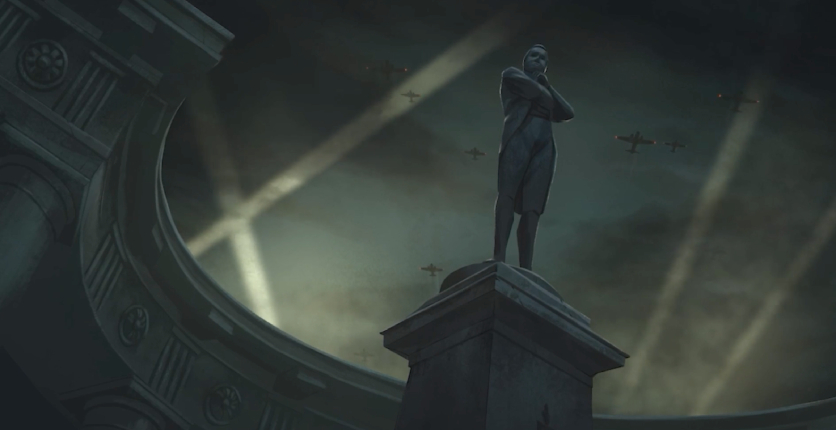
If the first half of The Violinist is a celebration of music and friendship, the film’s later chapters are a thrilling and increasingly harrowing exploration of war and its impact on ordinary lives.
What impressed me most was that the film does not shy away from depicting the brutality and atrocities of war. Death, violence and torture are present, but they are never included merely for shock value. Instead, they serve as sobering reminders of the human cost behind the historical events we may know only through textbooks and documentaries.
The animation is particularly striking during the large-scale wartime sequences. From the attack on the harbour and the sinking of ships to the terrifying depiction of the atomic bomb attacks on Japan, the film conveys the sheer scale and destruction of war without losing sight of the people caught within it.
The sound design also deserves special mention. The firing of weapons and the thunder of explosions feel startlingly real, creating moments of genuine tension. Yet these sounds are often juxtaposed against soaring orchestral music, creating a haunting contrast between the violence of war and the beauty that humanity is still capable of creating.
Even in its portrayal of the Japanese occupation, The Violinist avoids presenting history in simplistic black-and-white terms. While the Kempeitai is shown as cruel and authoritarian, the character of Takeshi-san, a Japanese officer whom Fei and the children in her care come to know, offers a more complicated glimpse into individual humanity amid a brutal system.
It is an important distinction. The film never diminishes the horrors and atrocities of war, but it recognises that history is ultimately made up of individuals, each capable of choices, compassion and cruelty.
For me, watching these events unfold on screen was also a stark reminder that peace should never be taken for granted. For Singapore, whose survival has always depended on our ability to safeguard our sovereignty and security, the film’s depiction of a nation caught in the chaos of war feels especially resonant. It is a timely reminder of why national defence, and the contributions of those who serve in National Service, continue to matter.
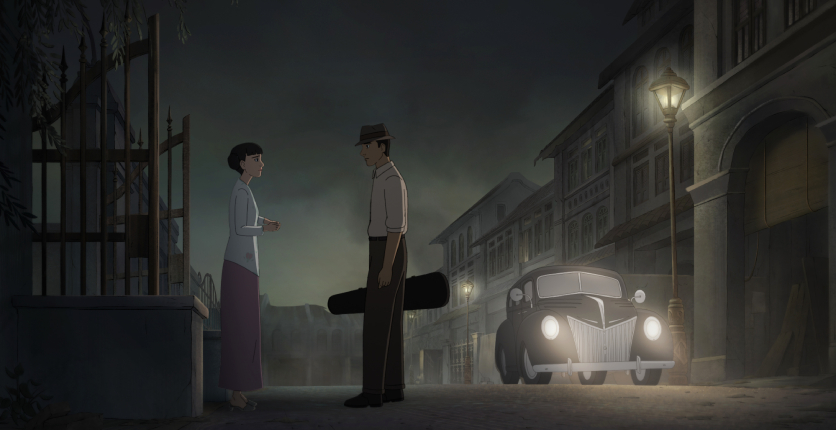
Beyond its exquisitely rendered animation and sweeping score, however, The Violinist succeeds most in the way it tells its deeply human story.
The film’s historical events are significant, but they never overshadow the emotions of the people living through them. Through Fei and Kai, we experience war not simply as a series of battles or historical milestones, but through separation, friendship, grief and the longing to find someone we love again.
The voice cast brings tremendous warmth and emotional depth to these characters. Local veterans Tan Kheng Hua, as the older Fei, and Adrian Pang, as Lim Bo Seng, are particularly compelling, while Fang Rong gives the younger Fei an affecting vulnerability and Ayden Sng brings sincerity to Kai.
The story is told with a simplicity and tenderness that allows its most emotional moments to land naturally. It does not need to constantly tell you what to feel; instead, it trusts the audience to sit with the characters through their joys and heartbreak.
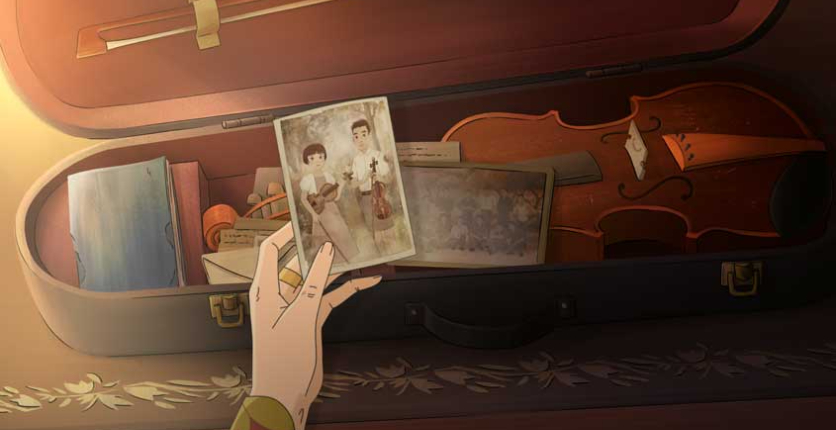
I honestly cannot remember the last time I teared up while watching an animated film (perhaps one of Studio Ghibli’s works) but The Violinist caught me completely off guard. By the time the story reached its bittersweet conclusion, I found myself struggling to hold back tears.
Perhaps that is ultimately what stayed with me most.
The Violinist may be set against some of the darkest chapters in history, but it is not a film about violence alone. It is about what remains when war has taken almost everything else: memory, friendship, love, hope… and music.
Through one violin, the film carries the voices of those who lived, suffered, fought and dreamed of a better future. And in doing so, it leaves us with a powerful reminder that even in the darkest moments of war, there are some things violence can never truly silence.
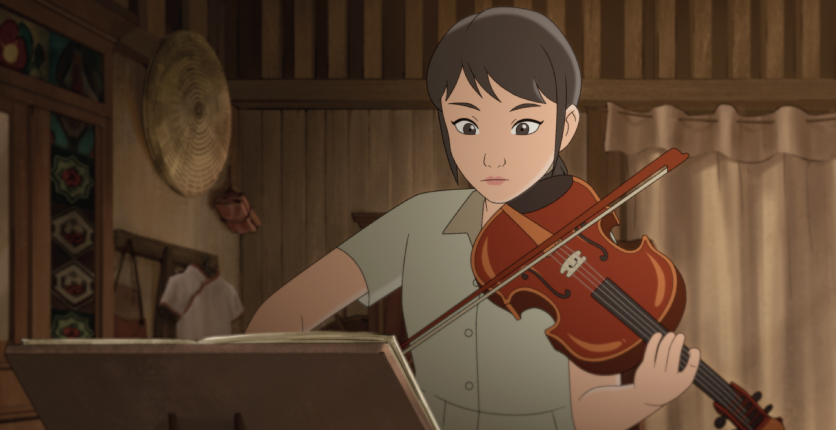
The Violinist opens on 17 September 2026 at Golden Village theatres, Shaw theatres, Filmhouse and other cinemas across Singapore.
SAFRA and MovieMax members were treated to over 60 pairs of free tickets to a preview of The Violinist in a movie contest giveaway. Thank you to all members who took part and congratulations to those who won! If you missed this giveaway, watch out for other movie ticket contests and giveaways on our website here.
READ MORE: The Violinist: A Singapore Story That Refuses To Be Silenced | SAFRA